The Skeleton Coast Road: A Desolate Drive
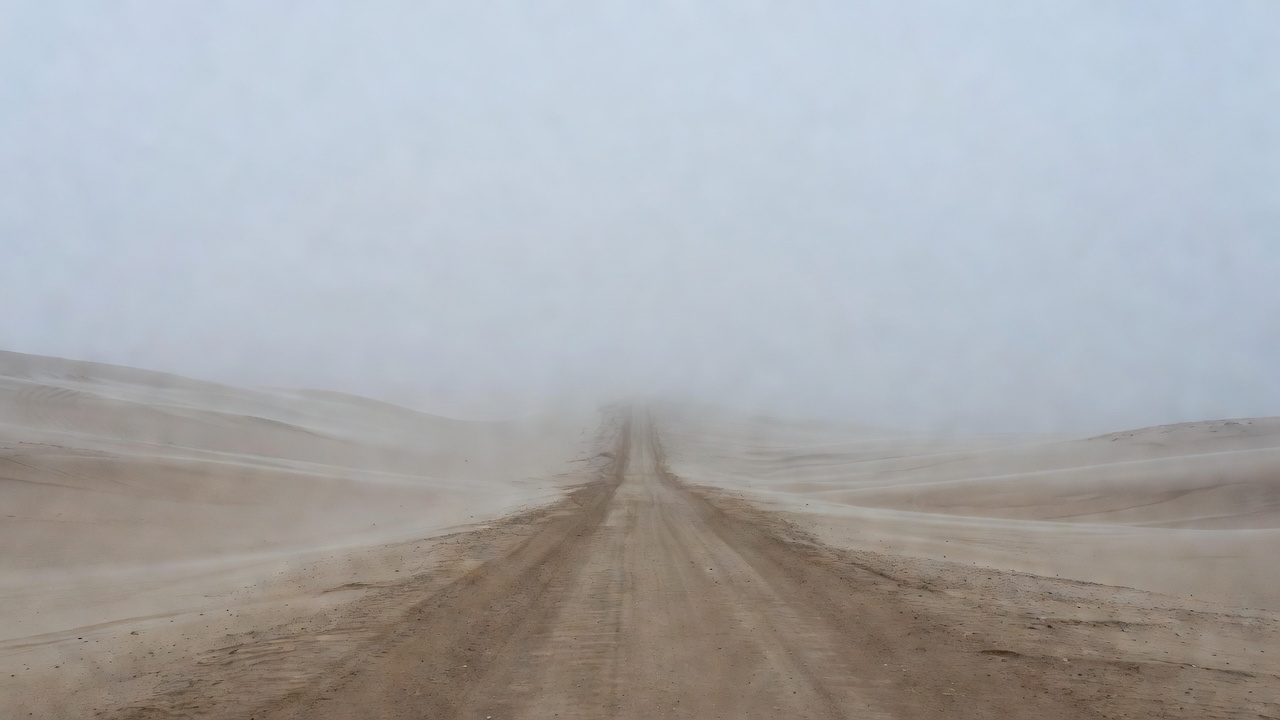
There are scenic routes built for leisurely appreciation, and then there are routes built by geographical necessity through hostile environments. The C34, running up the north-western coastline of Namibia, firmly belongs to the latter. Known as the Skeleton Coast, this is a drive defined by isolation, harsh climatic contrasts, and an overwhelming sense of scale.
The Allure of the Unknown
Portuguese sailors once referred to this stretch as "The Gates of Hell," while local San communities called it "The Land God Made in Anger." The road essentially tracks the brutal intersection where the ancient, arid dunes of the Namib Desert plunge directly into the freezing, turbulent waters of the Benguela Current. The resulting temperature clash creates a near-constant, heavy coastal fog that rolls inland over the salt road.
Driving this route is an exercise in atmospheric endurance. The landscape is littered with the literal skeletons of whales and seals, alongside the rusting, oxidizing hulks of ships that fell victim to the deceptive sandbanks and blinding fogs. It is not a place of conventional beauty; it is a place of sublime desolation.
Navigating the Terrain
The journey typically begins in the German-influenced coastal town of Swakopmund, heading north. The initial surface is a heavily compacted mixture of salt and gypsum. When dry, it feels as smooth and fast as tarmac. However, when the coastal fog is thick, the surface becomes slick and greasy, severely reducing traction and requiring careful throttle and brake management.
As you progress past Henties Bay—the last major outpost of civilization—the environment becomes increasingly barren. The road stretches perfectly straight for dozens of kilometres, creating a hypnotic, meditative driving state. Visual landmarks are restricted to distance markers, the occasional side track leading to a fishing spot, and the haunting shipwrecks, such as the Zeila, resting in the surf zone.
Route Specifications & Logistics
The southern portion of the C34 up to the Ugab River gate is accessible to most vehicles, though high clearance and durable tires are strongly recommended due to the abrasive nature of the salt and gravel. Beyond the Ugab River gate, you enter the Skeleton Coast National Park proper.
| Logistical Factor | Requirement / Condition |
|---|---|
| Vehicle Type | AWD/4x4 highly recommended. Robust all-terrain tires are essential. |
| Fuel Planning | Fuel up fully in Swakopmund or Henties Bay. Carry reserve jerry cans. |
| Park Access (North) | Strict entry times; permits must be acquired. No overnight stays without specific bookings. |
| Emergency Preparedness | Carry abundant water, basic spares, and ideally a satellite communication device. |
The Reality of the Drive
This is not a technical driving road requiring heel-and-toe downshifts. The challenge here is psychological and logistical. The monotony of the straight road combined with the flat, grey light of the fog can induce fatigue rapidly. Punctures are the most common mechanical issue, as sharp stones migrate through the salt crust. Changing a tire in the biting coastal wind while heavy trucks roar past from the distant salt pans is a rite of passage for this route.
Final Thoughts
The Skeleton Coast road offers an anti-tourist experience. There are no quaint cafes, no engineered scenic overlooks, and no safety nets. It is a stark reminder of the planet's indifference to human travel, offering an unforgettable drive for those drawn to the extremes of the natural world.