Australia's Snowy Mountains Highway
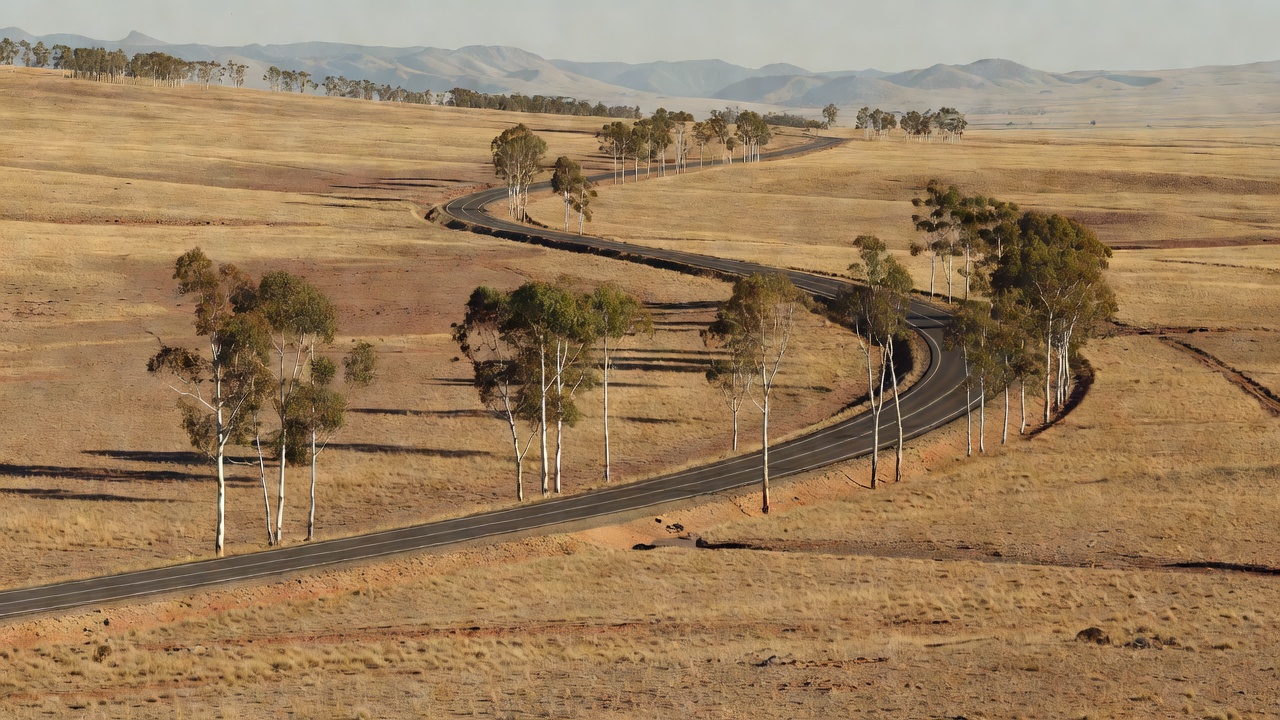
When planning a drive in south-eastern Australia, the default choice is almost always the Great Ocean Road. While undeniably spectacular, it suffers from heavy congestion and strict speed enforcement. Inland, connecting the Monaro plains to the Riverina, lies a vastly different experience: the Snowy Mountains Highway. It offers sweeping alpine curves, vast horizons, and a sense of isolation rare on fully sealed state highways.
The Allure of the Unknown
The Snowy Mountains Highway (B72) cuts directly across the northern section of Kosciuszko National Park. Unlike European alpine passes that feature tight, low-speed hairpins, this route is characterized by broad, sweeping arcs and high-speed undulating straights. It is a road engineered for grand touring in the truest sense, traversing a landscape of pale, skeletal snow gums and expansive button-grass plains.
The scenery here is uniquely Australian alpine. It lacks jagged peaks, replacing them with rolling, ancient high country that feels immense. Historically, this route serviced the massive post-war Snowy Mountains Scheme, an epic hydroelectric engineering project that left behind a network of dams and access roads intersecting the main highway.
Navigating the Terrain
The most engaging driving section lies between Adaminaby and Tumut. Leaving the dry plains of the Monaro, the road climbs steadily through the ghost town of Kiandra, once the site of a frantic, freezing 19th-century gold rush. Today, only a few historical markers remain, swallowed by the high plains.
Descending toward Tumut, the highway drops precipitously into the Yarrangobilly valley. Here, the sweeping corners tighten up, requiring heavier braking as the road follows the steep contours of the escarpment down into dense, dark pine plantations and lush eucalypt forests. The tarmac is generally wide and well-maintained, allowing for a fluid, rhythmic driving style that rewards smooth inputs.
Pros and Cons
| Advantages | Considerations |
|---|---|
| Fast, flowing corners perfect for GT cars and touring motorcycles. | Extreme wildlife hazard (kangaroos, wombats, wild horses) especially at dawn/dusk. |
| High-quality sealed surface over the vast majority of the route. | Subject to sudden alpine weather changes; snow chains required in winter. |
| Fractions of the traffic volume seen on coastal tourist routes. | Significant distances between fuel stops (plan around Adaminaby and Tumut). |
Logistics and Hazards
While the driving is generally less stressful than navigating a tight European pass or a crumbling Atlas mountain road, the Snowy Mountains Highway presents unique regional hazards. The most significant is wildlife. Macropods (kangaroos and wallabies) are abundant and unpredictable, making driving outside of daylight hours highly inadvisable unless strictly necessary.
Weather is another factor. Despite being in Australia, this is a true alpine environment. The highway traverses regions that receive heavy snowfall from June to October. National Park regulations often require drivers (excluding 4WDs in some instances) to carry snow chains during the declared winter period, and ice can linger in shaded corners long after the sun has risen.
Final Thoughts
The Snowy Mountains Highway is the antidote to the claustrophobia of coastal holiday traffic. It provides a vast, rolling canvas for driving, showcasing an ancient, worn landscape that is distinctively and stubbornly Australian. It is a route that breathes, allowing the driver to stretch the legs of their vehicle in relative solitude.